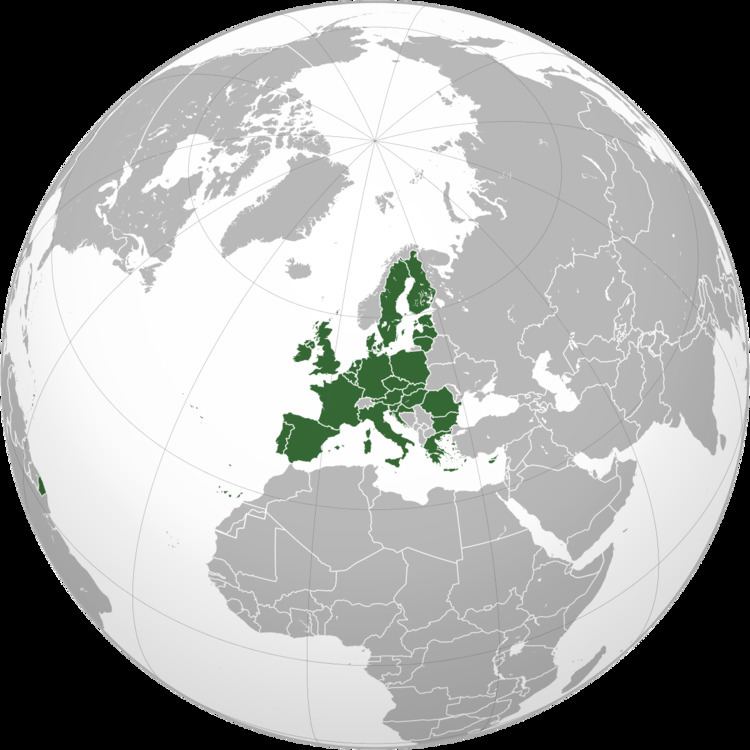
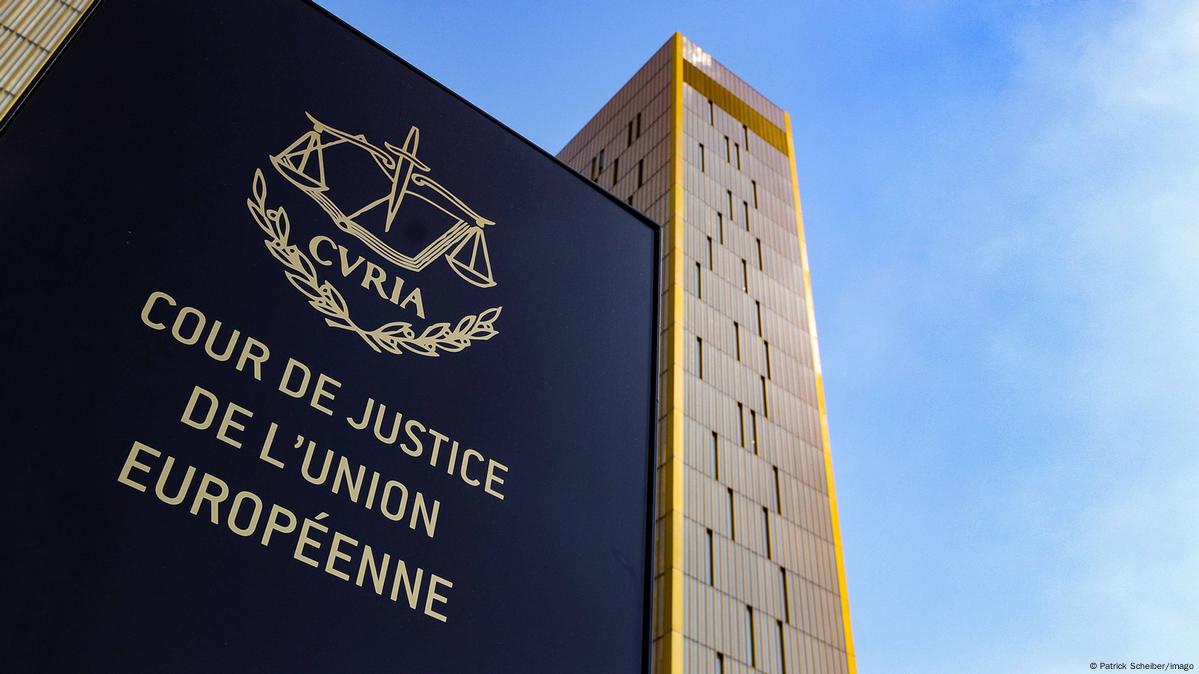
The Court of Justice of the European Union (CJEU) (French: Cour de justice de l'Union européenne or "CJUE"; Latin: Curia) is the judicial branch of the European Union (EU). Seated in the Kirchberg quarter of Luxembourg City, Luxembourg, this EU institution consists of two separate courts: the Court of Justice and the General Court. From 2005 to 2016, it also contained the Civil Service Tribunal. It has a sui generis court system, meaning 'of its own kind', and is a supranational institution.
The CJEU is the chief judicial authority of the EU and oversees the uniform application and interpretation of European Union law, in co-operation with the national judiciary of the member states. The CJEU also resolves legal disputes between national governments and EU institutions, and may take action against EU institutions on behalf of individuals, companies or organisations whose rights have been infringed.
Composition
The CJEU consists of two major courts:
- the Court of Justice, informally known as European Court of Justice (ECJ), which hears applications from national courts for preliminary rulings, annulment and appeals. It consists of one judge from each EU member country, as well as 11 advocates general.
- the General Court, which hears applications for annulment from individuals, companies and, less commonly, national governments (focusing on competition law, state aid, trade, agriculture and trade marks). The General Court is composed of 2 judges from each member country (currently 54), though only 49 seats are currently filled.
Judges and advocate generals are appointed for a "renewable 6-year term, jointly by national governments".
Function
The CJEU's specific mission is to ensure that "the law is observed" "in the interpretation and application" of the Treaties of the European Union. To achieve this, it:
- reviews the legality of actions taken by the EU's institutions;
- enforces compliance by member states with their obligations under the Treaties, and
- interprets European Union law.
The composition and functioning of the courts are regulated by the Rules of Procedure.
History
The CJEU was originally established in 1951 as a single court called the Court of Justice of the European Coal and Steel Communities. With the Euratom and the European Economic Community in 1957 its name changed to the Court of Justice of the European Communities (CJEC). In 1988 the Court requested the Commission to create a Court of First Instance and in 2004 it added the Civil Service Tribunal. The Civil Service Tribunal are for issues of public employment.
The Treaty of Lisbon in 2009 renamed the court system to the "Court of Justice of the European Union" and renamed the CJEC to the "Court of Justice".
The working language of the Court of Justice of the European Union is French.
Legal interpretation
The Court of Justice of the European Union embraces the substantive equality interpretation of the European Union anti-discrimination law.
See also
- Primacy of European Union law
- European Parliament in Luxembourg
Notes
References
Further reading
- Beck, Gunnar (2013). The Legal Reasoning of the Court of Justice of the EU. Oxford: Hart Publishing.
- Mikelsone, Gundega (2013). The Binding Force of the Case Law of the Court of Justice of the European Union. ISSN 2029-2058.[1] Archived 26 October 2019 at the Wayback Machine
- Bobek, Michal (2021). "What Are Grand Chambers for?". Cambridge Yearbook of European Legal Studies. 23: 1–19. doi:10.1017/cel.2021.5. ISSN 1528-8870. S2CID 239103282.
External links
- Official website
- Access to documents of the Court of Justice of the EU on EUR-Lex
- The archival fonds of the Court of Justice of the European Union is consultable at the Historical Archives of the European Union